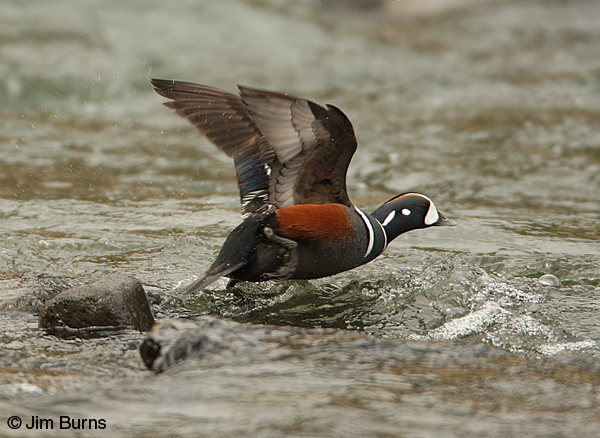
Somewhere on the broad continuum between hard core listers who tick and run and purists who disdain all listing for fear it will trivialize the beauty and complexity of their avocation, lies a small encampment of "adventure" birders. They keep their lists but their primary motivation and enjoyment comes from seeking new dimensions in birding--undiscovered locations, unexplored relationships, unconventional wisdom.
*** *** *** ***
The light show is about to begin. It is 5:00 a.m. Late June. High desert. Chris Goetze, Chuck LaRue, and I are birding the Colorado River. . . .from the rim of the Grand Canyon! We are on the south rim, but here on the Navajo Reservation where the river runs north/south, it is the east rim. Sunlight has just exploded over Black Mesa, warming our backs. Across the canyon to the west, Saddle Mountain and the apex of Mt Hayden are suddenly suffused with gold, the unfathomable gorge itself and its creator, the ribbon of river, still in deep shadow.
We are at 6000’. Our campsite is twenty yards from the rim. The Colorado is at our feet, figuratively speaking, at 2800’. Do the math. The river is roughly half a mile below us. . . .straight down! We had arrived the previous evening in darkness. Now, as we walk in sunrise splendor toward the edge, we chide Chris for moving her truck twenty yards farther "inland" in the middle of the night when a 30 mph east wind had blown up. Half awakening to the truck's movement, she had been terrified she was rolling toward the precipice.
As we step gingerly to the very brink, Chris whispers what is to become the morning's mantra: Be very afraid. Chris is an archeologist at Glen Canyon National Recreation Area, seven years a birder with two trips through the canyon. Chuck, who has lived and worked on the reservation for thirty-five years, has floated the canyon thirteen times. He is a lifelong birder, a biologist with a government contract for environmental surveying and a reservation birdlist larger than most Arizona birders’ state lists. I am not a water person but I have backpacked most of the canyon’s major trails. I am a bird photographer but I have not brought my long lenses. Half a mile vertically to the river’s elevation. Another half mile horizontally to the water’s edge. There isn’t a lens that long.
Birding news, like the river below us, runs its own course, at times convoluted and meandering, then plunging through narrows and rapids. In late March a research biologist on the river had seen a Harlequin Duck in breeding plumage at Mile 50. From Phantom Ranch at the bottom of the canyon she had telephoned her sister in Portal who emailed a birder in Tucson who mentioned it to a friend who just happened to see Chuck at a meeting. Chuck’s initial interest was mitigated by two hard facts: there is only one confirmed record for Harlequin Duck in Arizona; it is impossible to float the Colorado through the Grand Canyon without months, even years, of advance paperwork and permits. Then in April a boatman reports an odd duck—small, plump, white spots on the face—hanging out with mallards near a beach camp, still at Mile 50. A wild idea sends Chuck scrambling for his topographical maps.
On roadmaps the Painted Desert west of Cedar Ridge on Arizona 89 is a void. To the passing motorist it is featureless sand and sagebrush wilderness crisscrossed by a maze of two-tracks carved by Navajo sheepherders. On one of Chuck’s topo maps one of those traces comes out at the very edge of the Canyon—right above Mile 50! Chuck says we are here, at the end of a 25 mile gut-wrenching gauntlet of wrong turns and flat tires, to test our spotting scopes. Chris says she wouldn’t mind adding a Harley to her lifelist. I know better what we three pilgrims are really after. The duck may be here, we may see it, it may be a Harley, but it is truly an accidental, an accidental excuse for an accidental pilgrimage. The canyon is the grail.
I cannot take my eyes from the western rim. I glance at Chris and Chuck, as mesmerized as I, scopes and ducks forgotten. Sunlight chasing shadow as we gape and gasp. Each passing minute changing the textbook of rock before us into a microcosm of geologic time. Daybreak has filled the Kaibab, is drifting down through the Toroweap, is turning the upper reaches of the Redwall from slate to fuchsia to scarlet. Upriver, through a notch in still black palisades, the Triple Alcoves are awash in burnished copper, a finger of their reflection slashing down dark waters. Downriver, above the mouth of Nankoweap Canyon, the ancient granaries of the cliff dwellers are emerging from the night.
We have Chuck’s Kowa TSN-821 with offset eyepiece set up with front leg of tripod three inches from eternity. Our other scope is a Questar, but we soon realize that pointed downward at 60 degrees, its right-angle eyepiece requires the user to lean the upper body out into space. . . .over the edge! Despite its reputedly superior optics, the Q is not the scope of choice here. We can see two camps set up on the beaches below, about two miles apart, Mile 50 between them. Both are cleaning up and loading rafts. Chuck has found the Mallards below the second camp, a discernibly smaller, darker duck with them. We are picking our way carefully back and forth around one another along the crumbling ledge between the two scopes, queasy kneed, hoping for some composite consensus about the odd duck well over a mile away. A rock dislodges and clatters over the edge. Three heads jerk simultaneously, six eyes wide and counting privately. There are still three of us, all grinning foolishly. Be very afraid!
Our rimworld is warming rapidly and we are shedding layers, but the riverworld far below is still in shadow. We know we need bright sunlight to conclusively identify the Mallards’ little buddy from this distance. We have christened him “Eddy” because he often seems to be leading the flock into the faster currents near the rocks—just like any self-respecting Harley. At 7:00 a boat launches from the lower camp and drifts downstream, pushing the ducks farther from our vantage point. Interesting words fill the air. Frantically we begin verbalizing field marks, preaching to the choir—pointed butt . . . all dark . . . white spots in the flank area . . . wings all dark when he flaps . . . pale tertials . . . white spots on the head. This latter revelation would seem to clinch things, but as consensus builds, the raft, rather than continuing downriver, inexplicably turns into a small embayment and bears directly toward the flock..
Suddenly Chris recoils from the Kowa with a stricken look. “Guys! It’s a freaking coot! I just saw it doing that head jerk thing coots always do. And it hasn’t dived once. It’s just tipping up like a puddle duck. Harleys don’t do that!” Chuck scrambles to the scope and emits a groan. All is moot. The raft has put the flock up while we weren’t on them. He cannot find them anywhere on the river. Fatigued by eyestrain and the tension of being, literally, on edge for so long, we retreat to our campsite, throw down a cold breakfast, and laugh about “submitting” Eddy. Over last night’s campfire we had been in stitches speculating the reaction of the Arizona Bird Committee to a submission of a second state Harley record--observed from a mile away! No one’s laughing now. Three reputable birders have mistaken an American Coot for a Harlequin Duck--from a mile away!
We clean up, apply sunscreen, drift back to the rim. Chuck sneaks up on the Kowa again as Chris and I sit back from the edge and marvel at the time, the rock, and the space stretched out before us. It is only 8:45 but heatwaves are already rendering the Desert View watchtower, eighteen miles to our south, just a mirage. Chuck reports the sun is on the river now. We are getting running commentary on his progress with the scope: hey, cool! I can see a beaver swimming underwater . . . I saw the “v” wake . . . can’t find the ducks . . . damn rafters . . . there’s a deer on the flats behind the beach . . boats from the first camp are all underway . . . wonder if they could hear us if we hollered . . . wonder if you would lose consciousness before you hit the bottom . . . Yeeeow! I’ve got ‘em . . .they’re right below us in full sunlight! . . .there’s Eddy! . . . he’s a Harlequin for sure!
The light show is over. We pack up hurriedly, anxious to run the gauntlet back to Cedar Ridge before the noonday heat. Out across the barren sheeplands we come across a magnificent Golden Eagle on a dead calf. The eagle flushes to a hillside snag to await our passage. The calf is along a primary dirt access route and Chuck is worried the eagle will become bullet bait. We bail out and drag the reeking carcass a quarter mile across the desert scrub, away from the road.
We are renewed. We are exhilarated. We have played tourist, without the hordes of other tourists, at one of the planet’s last great places. We have played god, proactively, to help one of the planet’s last great creatures. We have seen God, someone’s God, at this adjective defying juncture of water, rock, and sky. The Harley is just a gratuity. Will we write it up for the Arizona Bird Committee? The subject doesn’t even come up. They’re reading about it right here for the first time.
*** *** *** ***
Four hours later, at Chuck’s house perusing his collection of field guides, we find two significant items. The first is in Madge and Bun’s Guide to the Ducks, Geese, and Swans of the World: “(Harlequins) swim bouyantly, with tail prominently cocked, jerking head when progressing.” The second, from Bellrose’s Ducks, Geese, and Swans of North America, states: “(Harlequins) at other times feed simply by . . . tipping up like dabbling ducks.” Chuck and I high five.
Four days later I am talking with my son about our adventure. He is not a birder but worked as a professional river guide and has friends on the Colorado. He asks if the rafts were motorized. I haven’t a clue. He rolls his eyeballs. “Dad, how are you going to convince anybody you guys identified a small duck from over a mile away if you didn’t even notice whether the rafts were using oars?” As I said, he is not a birder.
Four weeks later I receive an email from Chuck. The raft that floated into Eddy’s embayment and flushed the flock into the sunlight below us was carrying river biologist Helen Yard, Chuck’s good friend. Helen had heard the rumors, had seen the ducks, was moving in for diagnostic photos. She was confirming at river level what we were seeing from rim level. We hadn’t recognized Helen, but we had recognized Eddy. Eddy was a Harley.